
If the same operational problems keep returning, the organization is not structurally learning.
Many operational issues are treated as isolated incidents.
In reality, they often reveal recurring patterns hidden behind coordination, workarounds, and experienced individuals.
Opsdirector247 helps organizations reduce recurring operational friction, continuity dependency, and execution drift under pressure.
Start with a 5-question operational continuity check
Identify where recurring friction, coordination pressure, and continuity dependency may be accumulating.
Why operational friction keeps returning
Most recurring operational problems are not one-off issues.They survive through:• manual follow-ups
• dependency on experienced individuals
• unclear ownership across teams
• recurring coordination pressure
• workarounds becoming normal operationsTeams stay busy.
Problems still return.Over time, leadership becomes the informal continuity layer of the organization.
Most organizations do not see operational fragility while experienced people keep compensating.
Most organizations do not discover operational fragility during normal operations.They discover it when:• key individuals are unavailable
• coordination volume increases
• pressure accumulates across teams
• recurring exceptions become normal operationsAt that point, continuity depends less on structure and more on intervention.The organization keeps functioning — but with increasing operational strain.
Do these recurring operational patterns sound familiar?• recurring operational issues keep resurfacing
• ownership looks clear on paper, but weakens under pressure
• recurring obligations depend heavily on specific individuals
• operational continuity slows down when work crosses teams
• leaders step in to stabilize recurring operational frictionOver time, continuity starts depending on coordination, follow-ups, and experienced individuals compensating manually.
Most organizations assume they have a workload problem.Often, the deeper issue is operational continuity under pressure.The Operational Continuity Review identifies where execution still depends too heavily on coordination, individual memory, and manual stabilization.It helps reveal:• where execution depends too heavily on specific individuals
• where continuity weakens across teams
• where follow-up and coordination pressure accumulates
• where the same operational problems keep resurfacing
Start the operational continuity review:
5 focused questions to identify where recurring operational pressure and continuity dependency may be accumulating.
Recurring operational fragility rarely appears on financial statements directly.
It appears through:• recurring coordination pressure
• leadership bandwidth consumed by follow-ups
• operational delays and rework
• dependency on experienced individuals
• recurring escalation cycles
• execution inconsistency under pressureThe organization functions.
But with increasing operational strain.The cost is rarely one dramatic failure.
It is the repeated leadership attention required to keep the same issues from slipping again.
Recurring friction is a signal.
The system has not absorbed the lesson yet.
Operational continuity improves when recurring issues are converted into structure.That means:• fewer recurring escalations
• less dependency on follow-ups
• clearer operational ownership
• continuity that survives pressure and absence
• fewer operational surprises repeating over timeStrong operations do not just solve problems.
They reduce the chance that the same problems return.
What strong operational continuity looks like
Strong operational environments:
• reduce recurring coordination pressure
• clarify ownership across dependencies
• make escalation paths visible
• absorb operational lessons structurally
• reduce dependency on individual memory
Start the operational continuity review:
THE OPERATIONAL CONTINUITY MODEL
Operational continuity rarely breaks suddenly.It erodes through recurring friction, dependency accumulation, and unmanaged operational drift.
The five continuity layers define how recurring operational resilience is structurally maintained.
Tap to see how recurring friction becomes continuity risk.
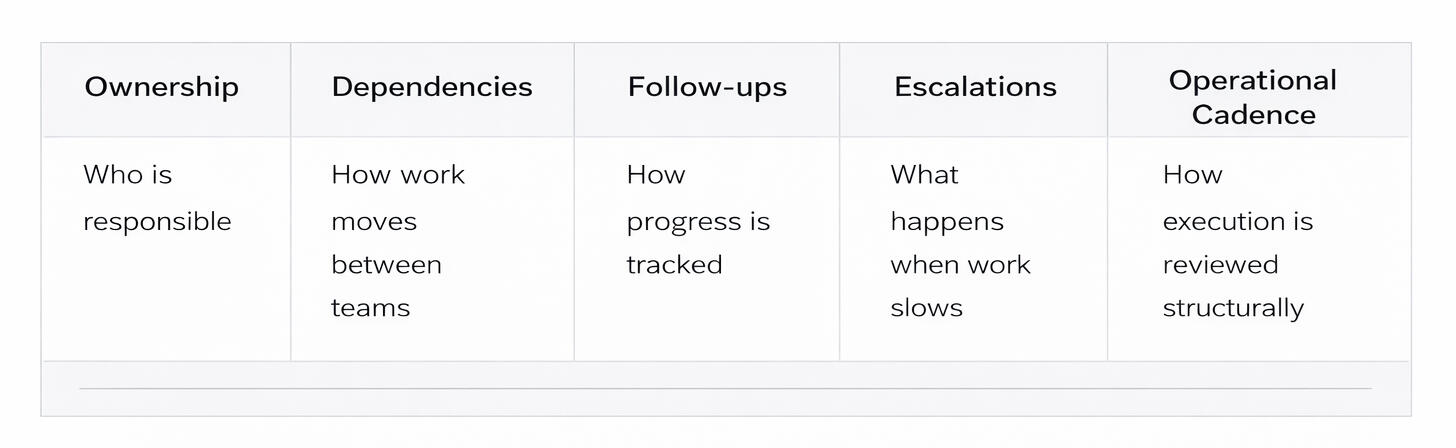
THE OPERATIONAL CONTINUITY RISK MAP
Recurring operational friction often concentrates around the same patterns:
• ownership ambiguity
• dependency concentration
• recurring escalations
• coordination overload
• continuity dependency on key individuals
Tap to identify the most common sources of continuity risk.
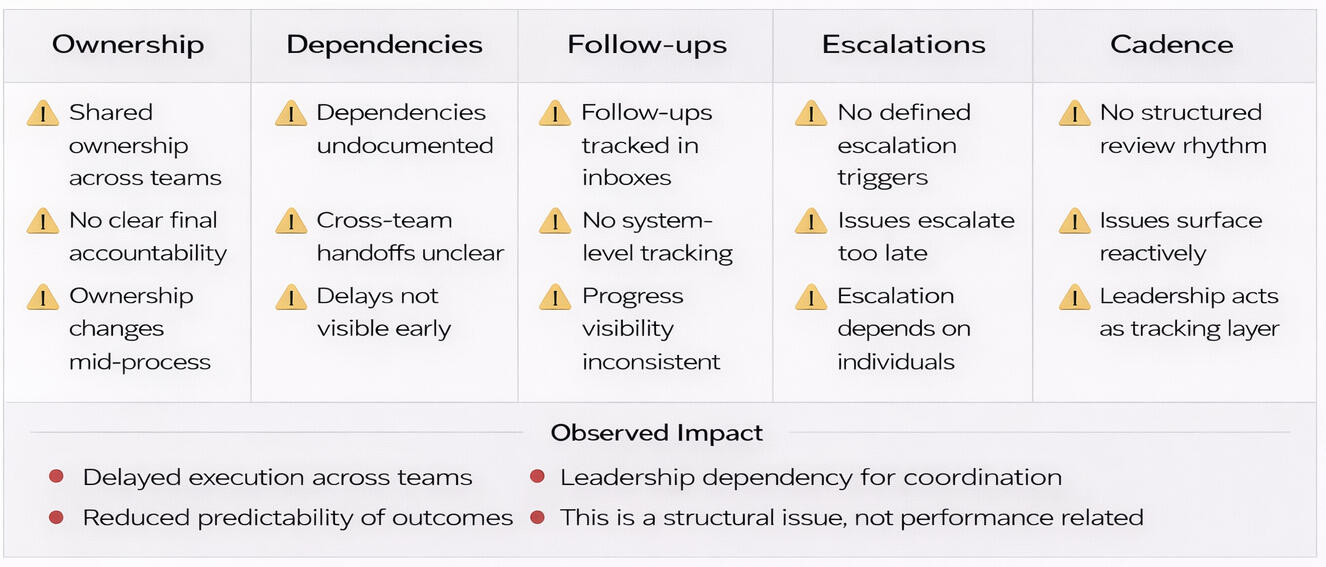
This discipline is distilled from more than 20 years of leading complex operational environments where continuity could not depend on constant supervision.
When recurring friction keeps returning, it shows where structure has not yet absorbed the lesson.
Identify where continuity depends on coordination
Recurring operational pressure usually leaves patterns.The review helps identify where:• continuity depends on experienced individuals
• recurring friction keeps returning
• coordination pressure accumulates
• ownership weakens across dependencies
• execution becomes harder to sustain without intervention
A focused conversation on recurring operational friction, continuity dependency, and coordination overload.
Controlled Operations Architecture
Operational Continuity & Resilience Framework
© 2025 Opsdirector247 — [email protected]